Inner Banner
Inner Banner
Inner Banner
Inner Banner
Solutions
Solutions
Solutions

Efficiency-Boosting Duct Design.

Increases energy output by 45%, reduces noise, and protects wildlife with an aerodynamic duct

Airfoils are like a thin water drop. An airfoil is one of the most used geometric shapes in the design of aeroplanes. Incoming flow is divided into two parts after encountering the airfoil. The flow that passes through the upper surface accelerates and becomes faster than the initial speed, and the flow that passes through the lower part decelerates and its speed decreases.

What caught our attention was the speed increase in the upper part of the airfoil. Wind speed is the most important factor in energy production by wind turbines. More wind speed means more electrical energy (quadratic relation). If we bend the wing of the aeroplane and make a duct from it, the upper part of the airfoil is placed inside the duct, and this means that the duct increases the wind speed in its inner part.

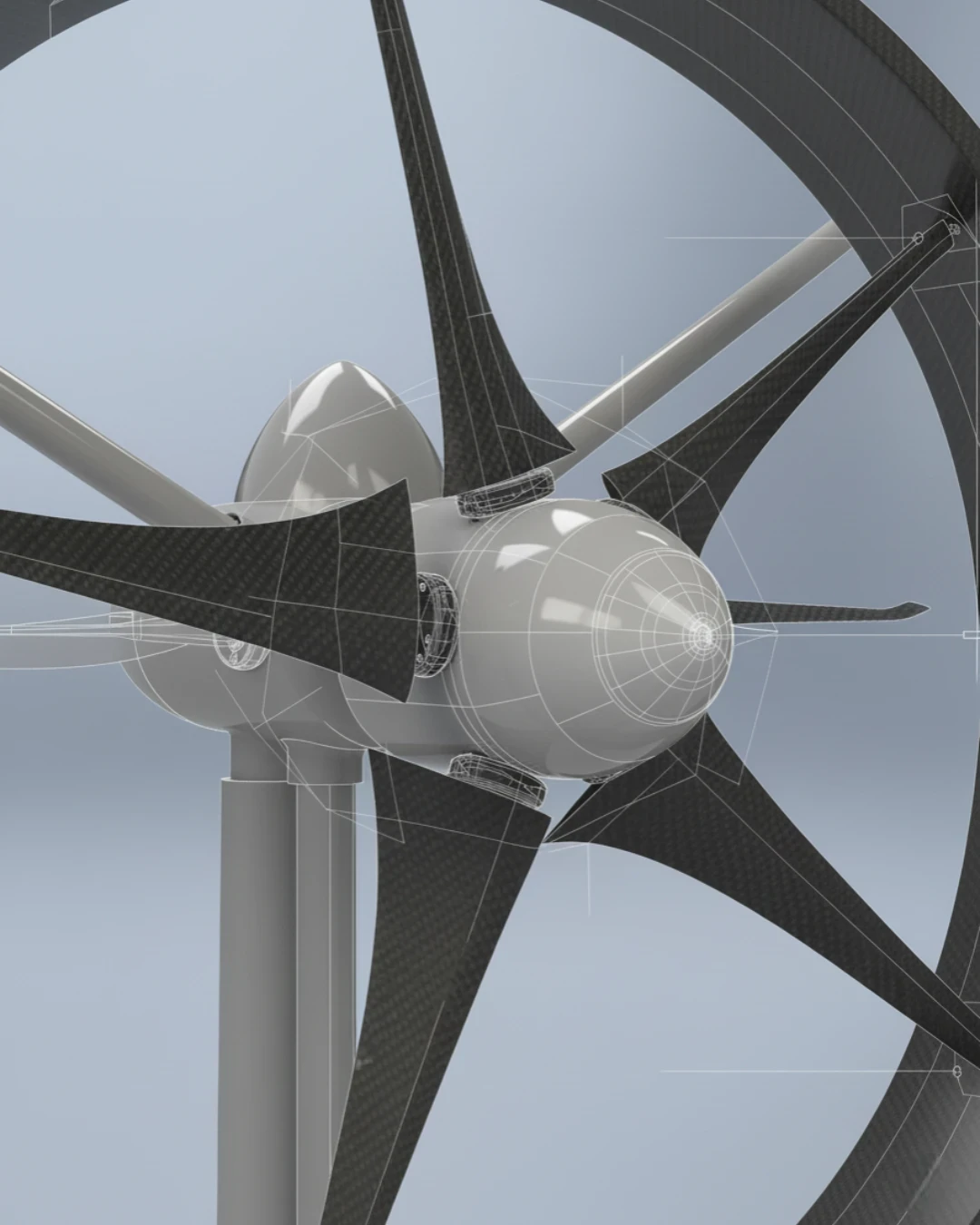
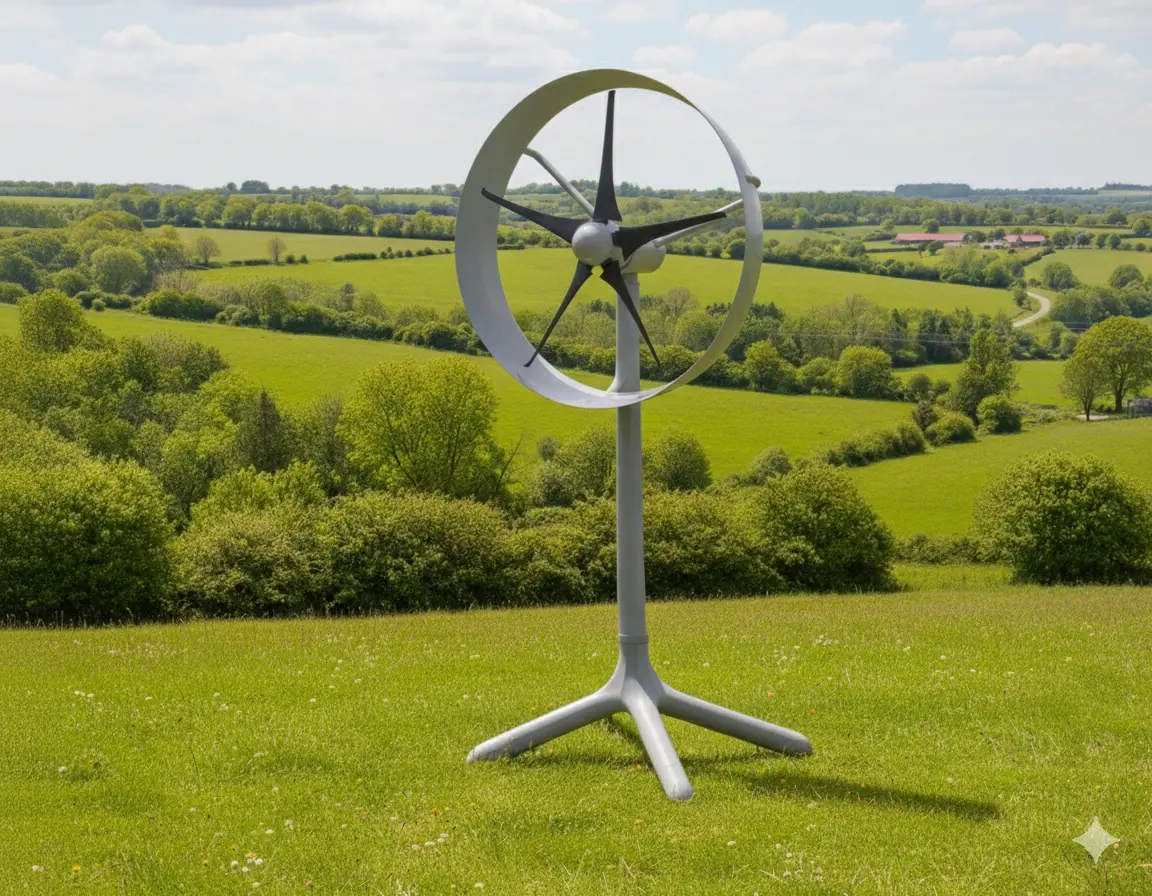
A duct (or diffuser) is a specially shaped shroud or casing that surrounds the wind turbine's rotor. Instead of allowing air to flow freely around the blades, the duct helps control and accelerate the airflow through the turbine. In order to show the duct's effect on flow and what it does, we run simulations to monitor flow behaviour.

We put our design inside the virtual wind tunnel with an inflow velocity of 7.5 m/s (which is the average wind speed in the UK). The flow velocity goes up to 8 m/s at the centre of the duct and goes up to 9.5 m/s at points near the surface of the duct. By taking the average of the velocity at different points along the diameter, 8.5 m/s is the average flow velocity passing through the duct. That clearly shows that the duct adds 1 m/s to the flow velocity. By using the power equation, 1m/s gives 45% more power accessible to extract from the wind.


Airfoils are like a thin water drop. An airfoil is one of the most used geometric shapes in the design of aeroplanes. Incoming flow is divided into two parts after encountering the airfoil. The flow that passes through the upper surface accelerates and becomes faster than the initial speed, and the flow that passes through the lower part decelerates and its speed decreases.

What caught our attention was the speed increase in the upper part of the airfoil. Wind speed is the most important factor in energy production by wind turbines. More wind speed means more electrical energy (quadratic relation). If we bend the wing of the aeroplane and make a duct from it, the upper part of the airfoil is placed inside the duct, and this means that the duct increases the wind speed in its inner part.

A duct (or diffuser) is a specially shaped shroud or casing that surrounds the wind turbine's rotor. Instead of allowing air to flow freely around the blades, the duct helps control and accelerate the airflow through the turbine. In order to show the duct's effect on flow and what it does, we run simulations to monitor flow behaviour.

We put our design inside the virtual wind tunnel with an inflow velocity of 7.5 m/s (which is the average wind speed in the UK). The flow velocity goes up to 8 m/s at the centre of the duct and goes up to 9.5 m/s at points near the surface of the duct. By taking the average of the velocity at different points along the diameter, 8.5 m/s is the average flow velocity passing through the duct. That clearly shows that the duct adds 1 m/s to the flow velocity. By using the power equation, 1m/s gives 45% more power accessible to extract from the wind.